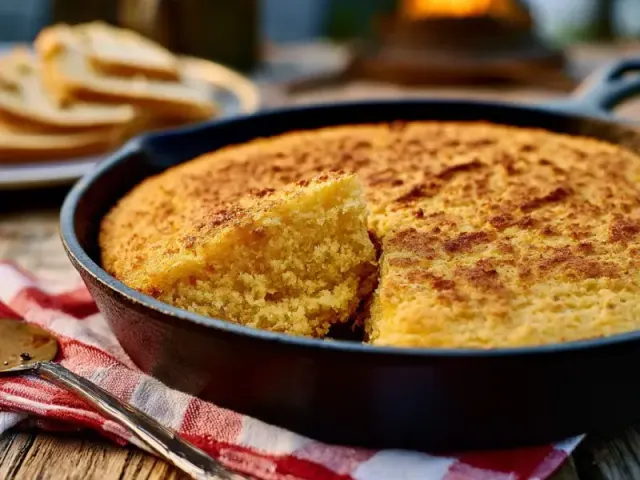
Cast Iron Camping Cornbread Skillet Over a Campfire
The first thing you notice is the smell. Cornmeal toasting in hot oil, mixing with wood smoke and the faint tang of buttermilk. That aroma means the crust is forming — crisp, golden, slightly crunchy. Inside, the crumb stays tender, almost fluffy, with just a hint of sweetness. This is campfire cornbread done right.

A cast iron skillet is the only tool for the job. It holds heat evenly, survives direct coals, and gives you that crust you can't get from a foil packet or a Dutch oven. I keep the ratio at 1:1 cornmeal to flour. That balance keeps the bread from crumbling into a pile of sand. It holds together, slice after slice, even when you're eating off a paper plate balanced on your knee.
Why This Method Works Over a Campfire
Baking over fire is different from your kitchen oven. Fire radiates heat from below, but the top stays cooler. That's why you need coals on top of the lid — or a foil tent with coals on it. Without top heat, the cornbread stays pale and gummy on top while the bottom burns. With even heat from above and below, the whole skillet bakes uniformly.
I use about 20-25 hot coals total for a 10-inch skillet. More coals underneath than on top — roughly 12-15 below, 8-10 above. That ratio gives a crisp bottom crust without burning, and a golden top that sets before the center dries out.
Getting the Fire Ready
Start your fire at least 30 minutes before you plan to cook. You need a bed of glowing coals, not tall flames. Hardwood coals — oak, hickory, maple — hold steady heat longer than softwood like pine. If you're using charcoal briquettes, light them in a chimney starter and let them ash over before spreading.
Arrange the coals in a circle slightly larger than your skillet. Place a campfire grate or a flat rock over them. Let the grate heat up while you mix the batter.
Mixing the Batter — Simple and Fast
Dry ingredients go first: cornmeal, flour, sugar, baking powder, salt. Whisk them together so the baking powder distributes evenly — no bitter pockets later. In a separate bowl, whisk the buttermilk, oil, and egg until the egg is fully broken up. Pour the wet into the dry and stir with a fork just until the flour disappears. A few lumps are fine. Overmixing develops gluten, and that makes cornbread tough, not tender.
If you want savory cornbread, fold in shredded cheddar or diced jalapeño after the batter comes together. For sweet cornbread, add an extra tablespoon of sugar or a handful of corn kernels.