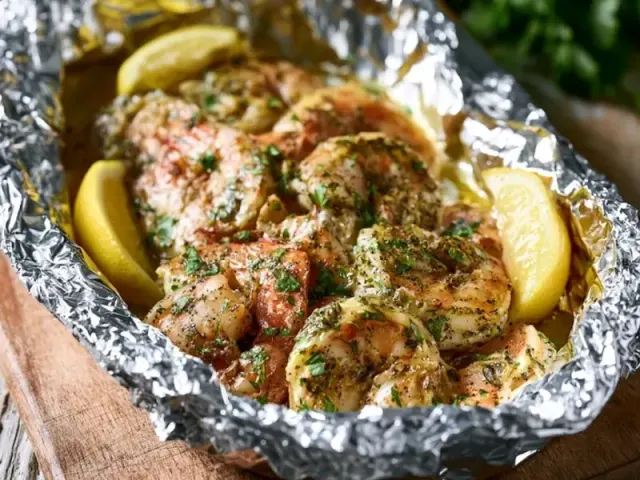
Hearty Foil Packet Garlic Butter Shrimp
The first sign is the smell—garlic hitting hot butter, rising through the smoke of a dying campfire. Then the sizzle inside the foil, a muted hiss that promises something good. A properly made foil packet of garlic butter shrimp is one of the fastest, most satisfying meals you can pull off at a campsite. No pots to scrub. No marinade that sat in a cooler all day. Just shrimp, butter, garlic, and heat.

But here's the catch: shrimp is easy to overcook, and butter is easy to burn. Most camp cooks get one or both wrong. The solution is a matter of technique—packet size, heat management, and timing. Here is the exact method I use every time.
Why Foil Packets Work for Shrimp
Shrimp needs moist heat to stay tender, and a sealed foil packet creates a mini steam oven. The butter melts, the garlic infuses, and the shrimp cooks in its own juices plus the butter. No direct flame touches the food. The packet does the work.
The trick is to not crowd the shrimp. If you pile them in a thick heap, the ones in the middle steam unevenly while the outer ones overcook. Arrange them in a single layer inside each packet. For 1½ pounds of large shrimp (21-25 count), that means four packets, each holding about 6 ounces of shrimp.
The Right Foil and the Right Fold
Heavy-duty foil is non-negotiable. Standard foil tears too easily over hot coals. Cut each sheet 12 by 18 inches. That gives you enough room to fold a tight seal with a pocket of air inside.
Place the shrimp in the center, then bring the two long edges together and fold them over twice, pressing firmly. Then crimp the short ends by folding them over twice as well, like sealing a envelope. Leave a little air space—about an inch of headroom—so steam can circulate. A flat, tight packet cooks unevenly.
Heat: Coals, Not Flames
Campfire flames are too hot and unpredictable. Wait until the fire burns down to a bed of glowing coals with no flames. That's the sweet spot: around 375-400°F. If you're using a grill, set it to medium-high. On a camp stove, use a dry cast iron skillet or a flat griddle over medium heat.
Place the packets directly on the coals or grates. Cook for 6 minutes, then flip carefully with tongs. Cook another 4-6 minutes. Total time: 10-12 minutes. At 10 minutes, open one packet and check. The shrimp should be pink and opaque, with a slight curl. If there's any gray translucency, reseal and cook 2 more minutes.
The Butter Problem—Solved
Butter burns at around 250°F. Inside a foil packet on hot coals, the temperature can climb higher. The solution is twofold. First, cut the butter into small pieces (about ½ tablespoon each) and distribute them on top of the shrimp. This lets the butter melt gradually rather than pooling and scorching. Second, add a squeeze of lemon juice. The acidity raises the smoke point of the butter slightly and adds a bright note that cuts through the richness.
Do not use margarine or spreadable butter substitutes—they contain water and can make the shrimp watery. Real unsalted butter gives the best flavor and texture.
Seasoning That Stays Put
Minced garlic, smoked paprika, a pinch of red pepper flakes, salt, and pepper. Mix these in a small bowl before you leave home. At the campsite, sprinkle the dry mix over the shrimp before adding the butter and lemon. The fat from the butter carries the seasoning into every bite. Smoked paprika is not traditional, but it adds a subtle campfire note that matches the cooking method.
Common Mistake: Opening Too Early
Resist the urge to peek. Every time you open a packet, steam escapes and cooking slows down. Trust the 10-minute mark. If your shrimp are smaller (31-40 count), check at 8 minutes. Jumbo shrimp (16-20 count) may need 14 minutes. Let the packet rest for 1 minute after opening—the shrimp continues to cook from residual heat.
Serving and Variations
Serve straight from the foil with crusty bread to soak up the garlic butter. Or spoon over quick-cook rice or couscous. For a low-carb option, serve with sautéed zucchini or a simple green salad.
To make it a complete meal packet, add thinly sliced zucchini, cherry tomatoes, or asparagus along with the shrimp. Keep vegetable pieces about ¼ inch thick so they cook in the same window. Avoid raw potatoes, carrots, or other dense vegetables—they need much longer to cook and will leave you with underdone veggies and overdone shrimp.
Make-Ahead Prep
Combine the dry spices at home. Portion the butter into small pieces and keep in a small container in the cooler. Keep the shrimp in a sealed bag on ice. At the campsite, assemble the packets in 5 minutes. This is the fastest way to get dinner on the table after a long day of hiking.
Food Safety for Camp Seafood
Shrimp is highly perishable. Keep it cold—below 40°F—in a cooler with plenty of ice until you're ready to cook. Do not let raw shrimp sit at room temperature for more than 30 minutes. Cooked shrimp should be eaten within 2 hours (1 hour if it's hot out). If you have leftovers, cool them quickly and return to the cooler. Reheat gently in a skillet or foil over low heat.
Allergen note: This recipe contains shellfish and dairy. For a dairy-free version, substitute olive oil or a plant-based butter. For gluten-free, this recipe is naturally gluten-free. Always check individual ingredient labels. Consult a qualified healthcare professional for specific dietary needs.
The takeaway: a perfect foil packet of garlic butter shrimp is about heat control, not complexity. Keep the shrimp in a single layer, seal the packet tight, and cook over coals for 10-12 minutes. That's it. The butter stays silky, the garlic mellows, and the shrimp comes out tender every time.
Frequently Asked Questions
Can I use frozen shrimp for this recipe?
Yes, but thaw them completely first. Place frozen shrimp in a sealed bag and submerge in cool water for 10-15 minutes, changing the water once. Pat dry before assembling packets to avoid watery results.
How do I know when the shrimp is fully cooked?
Shrimp cooks fast. It's done when the flesh turns from grayish-translucent to pink and opaque, and the shrimp curls into a loose 'C' shape. Overcooked shrimp curls into a tight 'O' and turns tough. Check after 10 minutes.
Can I add vegetables to the foil packet?
Absolutely. Add quick-cooking veggies like zucchini slices, cherry tomatoes, or asparagus. Cut them thin (about ¼ inch) so they cook in the same time as the shrimp. Avoid dense veggies like raw potatoes or carrots unless you pre-cook them.
What if I don't have a campfire?
Cook the packets on a grill over medium-high heat, or in a dry cast iron skillet on a camp stove. Same timing applies. You can even bake them in a 400°F oven for 12 minutes.
How do I avoid burning the butter?
Butter burns easily over direct heat. The key is to place the packets on hot coals or grill grates, not directly in flames. The steam inside the packet keeps the butter from scorching. Flipping once also helps distribute heat evenly.