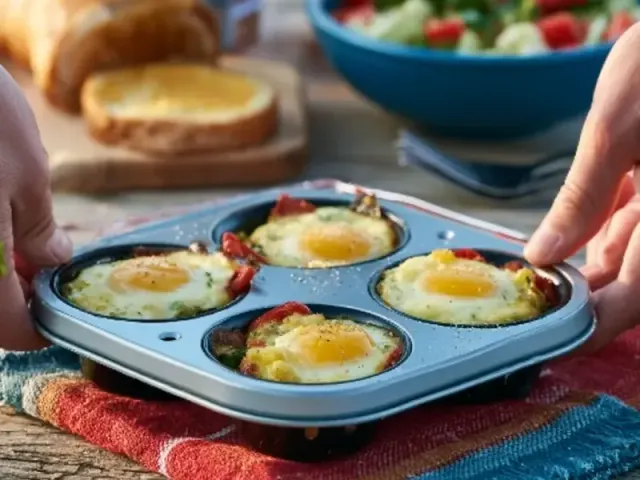
Foolproof Easy Camping Muffin Tin Breakfast
The first time I tried making eggs in a muffin tin at a campsite, I ended up with a pan of scrambled-looking pucks stuck to the cast iron. The edges burned while the centers stayed liquid. It was a mess. But after a few rounds of testing (and a lot of foil), I landed on a method that works every time — no sticking, no raw spots, just tender egg cups that lift right out.

Why This Technique Works
Eggs are finicky over uneven camp heat. The trick is twofold: create a barrier between the pan and the eggs, and control the steam. Heavy-duty foil liners do both. They prevent direct contact with hot cast iron (which causes burning), and when you cover the pan, the trapped steam gently cooks the eggs from all sides. The result is a custard-like set, not a dry scramble.
The Foil Liner Method
I keep the foil squares at exactly 5 inches — any smaller and they don't cover the well fully; any larger and the edges get in the way of the pan's lid or foil cover. Press the foil in firmly so it contacts the metal, then fold the overhang down around the rim. This creates a stable cup that won't collapse when you pour in the egg. Grease the inside lightly with oil or butter — this ensures the cooked egg slides out cleanly.
Getting the Heat Right
Camp stoves and campfires have different personalities, but the principle is the same: medium-low heat. On a stove, set the burner to a low flame. On a fire, wait until the coals are glowing orange with a thin layer of ash — that's the sweet spot. Place the pan on a grate set about 4 inches above the coals. If the pan is directly on hot coals, the bottom will scorch before the eggs set.
Covering the pan is non-negotiable. Use a tight-fitting lid or a sheet of heavy-duty foil crimped around the edges. The lid traps steam and heat, cooking the tops of the muffins without needing to flip them. I rotate the pan 180 degrees halfway through to compensate for hot spots.
Doneness Cues
At 18 minutes, start checking. The edges should be puffed and golden, the center should feel firm to a gentle press. Insert a knife into the center of a muffin — if it comes out clean, they're done. For extra certainty, an instant-read thermometer should hit 160°F. If the tops are still wet and jiggly, cover and cook 3 more minutes. Common mistake: pulling them too early because the edges look done. The center needs that steam time.
Make-Ahead and Reheating
These cups are designed to be made at camp, but they also travel well. Bake them fully at home, cool, and pack in a sealed container in the cooler. At camp, reheat in foil over low coals or in a covered skillet for about 5 minutes. They stay moist because the foil traps steam during reheating. Do not microwave them in foil — transfer to a plate first.
Adaptations and Allergen Notes
Swap the sausage for cooked bacon bits, ham, or black beans for a vegetarian version. Omit cheese and use unsweetened almond milk for dairy-free. This recipe is naturally gluten-free. Always check your sausage and cheese labels for hidden gluten or dairy if you have sensitivities. For specific dietary needs, consult a qualified professional.
Safety at the Campsite
Hot cast iron stays hot long after you move it off the heat. Set the pan on a heatproof surface (a rock, a log, or a camping trivet) and warn kids. Use thick gloves or tongs to handle the foil cups — steam can escape when you lift them. Keep a bucket of water or sand nearby when cooking over a fire.
Takeaway: A well-prepped foil liner and a covered pan on medium-low heat are the secrets to eggs that cook evenly, release cleanly, and taste like a hot breakfast — not a campfire science experiment. Once you've got the technique, you can vary the fillings endlessly.
Frequently Asked Questions
Can I make these muffin cups ahead of time at home?
Yes. Fully bake them at home (350°F for 15-18 minutes), cool completely, and pack in a sealed container in the cooler. Reheat at camp in foil over low coals or in a skillet with a lid for 5-7 minutes.
What if I don't have a cast iron muffin pan?
Use a regular 12-cup metal muffin pan if you're cooking on a camp stove with a stable burner. For campfire, wrap the pan in two layers of heavy-duty foil to protect it from direct heat, and place on a grate. Alternatively, make the cups directly in a cast iron skillet — just shape foil into 8 individual cups and set them in the skillet.
Why do my eggs sometimes turn out rubbery or watery?
Rubbery eggs usually mean the heat was too high. Keep the flame or coals at medium-low. Watery eggs often come from undercooking — the center should be fully set (160°F). Also, avoid over-whisking the eggs, which incorporates too much air and can cause them to separate as they cook.
Can I add potatoes or bread to the cups?
Yes, but pre-cook them first. Diced cooked potatoes or torn bread cubes work well — add about 1 tablespoon per cup before pouring in the egg. Raw potatoes or bread will stay undercooked and make the cups soggy.
Campsite Egg & Sausage Muffin Cups
Savory egg and sausage cups baked in a cast iron muffin tin over a campfire or camp stove — a hearty, grab-and-go breakfast that stays intact and reheats well.
- 10-inch cast iron skillet or 8-well cast iron muffin pan
- heavy-duty foil
- cooking spray or oil
- tongs
- heat-resistant gloves or pot holders
- campfire grate or camp stove
- 6 large eggs
- 1/4 cup whole milk or buttermilk
- 1/2 teaspoon salt
- 1/4 teaspoon black pepper
- 1/2 cup shredded cheddar cheese
- 4 fully cooked breakfast sausage links (or 1/2 cup cooked crumbled sausage)
- 1 tablespoon olive oil or butter (for greasing foil liners)
- Optional: 2 tablespoons diced bell pepper or chopped chives
- Prep the foil liners: Tear off eight 5-inch squares of heavy-duty foil. Press each square into the wells of the muffin pan, folding the edges over the rim to create a cup. Lightly grease the inside of each foil cup with oil or butter.
- Make the egg base: In a bowl, whisk eggs, milk, salt, and pepper until no streaks remain. Stir in cheese and any optional veggies.
- Assemble the cups: Slice each sausage link into 4 coins (or use crumbled sausage). Drop 4-5 sausage pieces into each foil cup. Ladle egg mixture into each cup, filling about 2/3 full — about 3 tablespoons per cup. Stir gently with a fork to distribute sausage.
- Set up the heat: For a camp stove, place muffin pan on the burner over medium-low heat. For a campfire, set a grate over medium-hot coals (not direct flames) and place the pan on the grate. Cover the pan tightly with a large sheet of heavy-duty foil or a lid to trap steam.
- Cook the muffins: Cook for 18-22 minutes, rotating the pan 180 degrees halfway through. The eggs are done when the center is set and a knife inserted comes out clean — no jiggling. The internal temperature should reach 160°F (use an instant-read thermometer if you have one).
- Remove and rest: Using tongs and heat-resistant gloves, lift the pan off the heat. Let rest 2 minutes. Lift each foil cup out by the edges. Serve warm or let cool slightly and wrap in foil for a grab-and-go breakfast.
Storage & food safety: Keep leftover cups in a sealed container in a cooler with ice packs for up to 2 days. Reheat in foil over low coals or in a skillet with a lid. Do not leave perishable eggs out for more than 2 hours (1 hour above 90°F). For dairy-free, omit cheese and use unsweetened almond milk. For gluten-free, this recipe is naturally gluten-free. Always handle hot cast iron and foil with care — use a thick cloth or gloves. Common allergen note: contains eggs and dairy.
Recipe: Campsite Egg & Sausage Muffin Cups
Equipment
- 10-inch cast iron skillet or 8-well cast iron muffin pan
- heavy-duty foil
- cooking spray or oil
- tongs
- heat-resistant gloves or pot holders
- campfire grate or camp stove
Ingredients
- 6 large eggs
- 1/4 cup whole milk or buttermilk
- 1/2 teaspoon salt
- 1/4 teaspoon black pepper
- 1/2 cup shredded cheddar cheese
- 4 fully cooked breakfast sausage links (or 1/2 cup cooked crumbled sausage)
- 1 tablespoon olive oil or butter (for greasing foil liners)
- Optional: 2 tablespoons diced bell pepper or chopped chives
Instructions
- Prep the foil liners: Tear off eight 5-inch squares of heavy-duty foil. Press each square into the wells of the muffin pan, folding the edges over the rim to create a cup. Lightly grease the inside of each foil cup with oil or butter.
- Make the egg base: In a bowl, whisk eggs, milk, salt, and pepper until no streaks remain. Stir in cheese and any optional veggies.
- Assemble the cups: Slice each sausage link into 4 coins (or use crumbled sausage). Drop 4-5 sausage pieces into each foil cup. Ladle egg mixture into each cup, filling about 2/3 full — about 3 tablespoons per cup. Stir gently with a fork to distribute sausage.
- Set up the heat: For a camp stove, place muffin pan on the burner over medium-low heat. For a campfire, set a grate over medium-hot coals (not direct flames) and place the pan on the grate. Cover the pan tightly with a large sheet of heavy-duty foil or a lid to trap steam.
- Cook the muffins: Cook for 18-22 minutes, rotating the pan 180 degrees halfway through. The eggs are done when the center is set and a knife inserted comes out clean — no jiggling. The internal temperature should reach 160°F (use an instant-read thermometer if you have one).
- Remove and rest: Using tongs and heat-resistant gloves, lift the pan off the heat. Let rest 2 minutes. Lift each foil cup out by the edges. Serve warm or let cool slightly and wrap in foil for a grab-and-go breakfast.