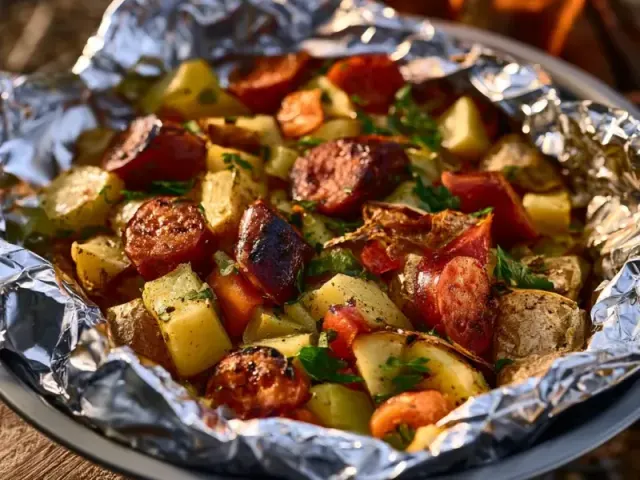
Backcountry Campfire Kielbasa Foil Packets: Smoky, Simple Dinner
The first thing you notice is the smell. Smoke, yes. But also the sweet edge of paprika hitting hot foil, the faint garlic that drifts up when you crack the seal. That's the moment this whole fire-tending, coal-shifting effort becomes worth it. Backcountry campfire kielbasa foil packets are the kind of meal that makes you forget you're eating off a log.

Why Foil Packets Work for Backcountry Cooking
Foil packets are a backcountry workhorse. They combine everything into one sealed pouch β protein, starch, vegetables β and cook by steam trapped inside. The direct contact with hot coals gives the kielbasa a light char while the potatoes steam tender. No pot to scrub. No plate to wash. Just a foil ball to toss in the fire pit after dinner.
The key is understanding how heat moves through a packet. Coals radiate heat upward and also conduct through the foil. That's why you flip once: both sides get direct contact, so the potatoes at the bottom don't stay raw while the top layer steams. I keep the ratio at roughly equal parts kielbasa, potatoes, and peppers by volume β not weight. That gives you enough fat from the sausage to keep the vegetables from drying, and enough starch to soak up the smoky juices.
Choosing Your Ingredients
Kielbasa
Use a fully cooked, smoked kielbasa. It's already safe to eat cold, so you're just heating it through and getting some browning. Slice it into 1/2-inch rounds β thick enough to stay juicy, thin enough to brown in the time it takes potatoes to soften. Turkey kielbasa works too, but it has less fat. Add an extra tablespoon of oil to compensate.
Potatoes
Yukon Golds hold their shape without going mealy. Cut them into 1/2-inch cubes β anything larger and they'll still be crunchy at the center when the sausage is done. If you're prepping at home, keep cut potatoes submerged in cold water in a sealed container to prevent browning. Drain and pat dry before assembling.
Peppers and Onion
Red and green bell peppers bring sweetness and color. Cut them into 1-inch pieces β larger than the potatoes, because peppers soften faster. Onion chunks should be about the same size. If you like heat, add a diced jalapeΓ±o or a pinch of red pepper flakes.
The Technique: Folding, Coals, and Timing
Folding a Reliable Packet
Use heavy-duty foil. Tear off a sheet 18 inches long β long enough to leave room for folding without the filling touching the crimps. Pile the ingredients in the center. Bring the long edges together and fold over twice, pressing the crease flat with your fingers. Then fold each short end twice, crimping tightly. You want a sealed pouch with a little air space β about an inch of gap between the food and the foil β so steam can circulate.
Getting the Coals Right
A campfire with flames will burn the foil and char the outside while leaving the inside raw. You need a bed of glowing coals with no active flames. Build your fire, let it burn down, and rake the coals into a flat, even layer. Test the heat: hold your hand about 4 inches above the coals. If you can keep it there for 3-4 seconds, it's ready. Too hot and the potatoes will scorch before they soften. Too cool and you'll be waiting 40 minutes.
Cooking and Doneness Cues
Place the packets directly on the coals. Cook for 12 minutes, then use tongs to flip each packet. Cook another 12-15 minutes. Total time: 24-27 minutes. The exact time depends on coal temperature, packet thickness, and altitude. At higher elevations (above 5,000 feet), add 5 minutes to the total cook time.
To check doneness, carefully open one packet β tilt the opening away from your face to avoid the steam blast. Pierce a potato cube with a fork. It should slide in with no resistance. The kielbasa should have browned edges and be hot all the way through. If the potato is still firm, reseal the packet and cook another 3-5 minutes.
Common Mistakes and How to Avoid Them
- Using thin foil. Regular foil tears on coals and leaks steam. Always use heavy-duty. If you only have regular, double-layer it.
- Sealing too loosely. Steam escapes, and the potatoes dry out. Double-fold every seam and press firmly.
- Skipping the flip. Without flipping, the bottom layer cooks faster than the top. The potatoes at the top end up underdone.
- Overcrowding the packet. A packed-tight packet steams unevenly. Leave a little space; use separate packets if needed.
Adapting for Grill or Camp Stove
On a grill: preheat to medium (about 400Β°F). Place packets over direct heat, close the lid, and cook for 12 minutes per side. On a camp stove: use a cast-iron skillet over medium heat. Add the ingredients directly to the skillet (no foil), cover, and cook for 15-20 minutes, stirring once or twice. The skillet version won't have the same smoky char, but it's faster and uses less fuel.
Takeaway
Backcountry campfire kielbasa foil packets are about efficiency and flavor. Get the coals right, seal the packet tight, and trust the steam. The result is a complete dinner β smoky, tender, and satisfying β with nothing left to clean but a crumpled ball of foil. That's the kind of camp cooking that lets you spend more time watching the fire and less time washing dishes.
Frequently Asked Questions
Can I use a different sausage instead of kielbasa?
Yes. Smoked sausage, turkey kielbasa, or even pre-cooked chicken sausage work well. Adjust cook time if using raw sausage β cook until it reaches an internal temperature of 165Β°F (74Β°C).
How do I know when the coals are ready for cooking?
You want a bed of glowing coals with no active flames. The coals should be covered in gray ash but still emit strong, steady heat. Hold your hand about 4 inches above the coals β you should be able to hold it there for 3-4 seconds before it feels too hot.
Can I add other vegetables?
Absolutely. Zucchini, summer squash, corn kernels, or cherry tomatoes all work. Cut them to a similar 1/2-inch size so they cook evenly. Add softer veggies like tomatoes in the last 10 minutes to prevent mushiness.
What if I don't have heavy-duty foil?
Double up two layers of regular foil. The outer layer may char, but the inner layer will protect the food. Still seal tightly with double folds. Expect slightly faster cooking β check at 20 minutes total.
How can I make this dairy-free or gluten-free?
This recipe is naturally dairy-free and gluten-free as written. Always check the kielbasa label for gluten-containing fillers; most smoked kielbasa is gluten-free. For specific dietary needs, consult a qualified professional.